
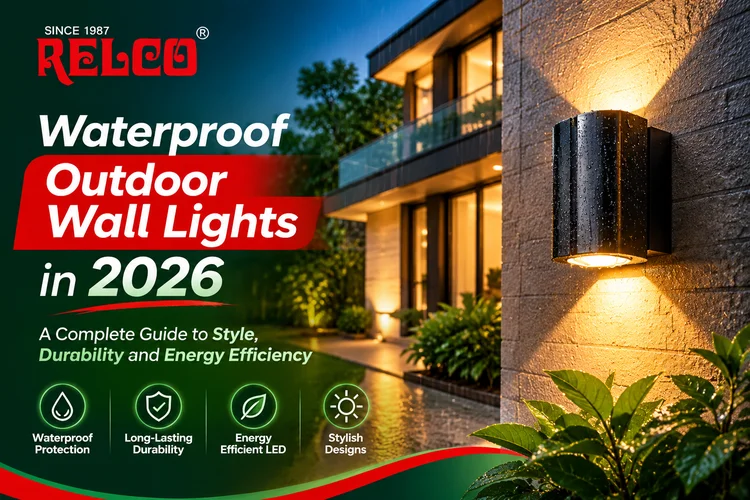
Waterproof Outdoor Wall Lights in 2026: A Complete Guide to Style, Durability and Energy Efficiency
Introduction to Waterproof Outdoor Wall Lights in 2026
Outdoor lighting plays an important role in improving the appearance, safety and functionality of residential, commercial and industrial properties. From illuminating entrance doors and garden walls to brightening balconies, parking areas, building exteriors and commercial walkways, the right lighting can make outdoor spaces more attractive and practical. However, outdoor fixtures face challenges that indoor lights rarely experience, including rain, moisture, dust, temperature changes and prolonged exposure to sunlight. This is why choosing Waterproof Outdoor Wall Lights in 2026 requires more attention than simply selecting a design that looks good.
Modern outdoor lighting combines attractive designs with energy-efficient LED technology, durable construction and improved protection against environmental conditions. Property owners can choose from minimalist wall-mounted fixtures, contemporary architectural lights, decorative exterior lamps and powerful lighting solutions for commercial buildings. The right choice depends on where the light will be installed, how much illumination is required and the environmental conditions surrounding the installation.
As LED technology continues to develop, outdoor lighting decisions increasingly involve efficiency, colour temperature, beam direction, maintenance requirements and weather protection. Buyers should also understand the difference between water-resistant and waterproof lighting products instead of relying only on marketing descriptions. Businesses researching lighting brands, including Relco India, should evaluate the specifications of individual products and select fixtures that match their actual installation requirements.
This guide explains how waterproof outdoor wall lights work, which features matter most, how LED technology improves outdoor illumination and what buyers should consider before investing in exterior lighting in 2026.
What Are Waterproof Outdoor Wall Lights?
Waterproof outdoor wall lights are lighting fixtures designed to be installed on exterior walls and provide illumination while protecting their electrical components against specified environmental conditions. Depending on their construction and protection rating, these fixtures may be suitable for entrances, balconies, garden boundaries, exterior corridors, terraces, parking areas and other outdoor locations.
The term waterproof is commonly used to describe lights that can withstand exposure to water. However, not every outdoor wall light offers the same level of protection. Some fixtures are designed to handle splashes and rain, while others may provide stronger protection against water jets or temporary immersion. The appropriate level depends on the product's tested protection rating and the conditions at the installation location.
A suitable outdoor wall light generally combines a weather-resistant enclosure, properly sealed joints, durable mounting components and electrical connections appropriate for the installation environment. The fixture's construction should also support reliable operation under expected temperature and humidity conditions.
When selecting Waterproof Outdoor Wall Lights in 2026, buyers should consider both the fixture's design and its technical specifications. A stylish light may improve the appearance of a building, but its long-term suitability depends on whether it can withstand the conditions in which it will be used.
Why Waterproof Outdoor Wall Lights Are Important in 2026
Protection Against Rain and Moisture
Rain and moisture are among the most important factors to consider when installing outdoor lighting. Water entering an unsuitable fixture can damage electrical components, cause corrosion and lead to premature failure. In severe cases, damaged electrical equipment can create a safety hazard.
Weather protection is especially important for wall lights installed on exposed exterior walls, open balconies, garden boundaries and building entrances without overhead cover. In these locations, fixtures may experience direct rainfall, wind-driven water and repeated wetting and drying cycles.
A suitable protection rating helps buyers understand how well a fixture resists water and solid particles under specified test conditions. Nevertheless, the rating should be considered alongside the manufacturer's installation instructions, sealing arrangements and maintenance recommendations.
Improved Exterior Appearance
Outdoor wall lights can transform the appearance of a building after sunset. Carefully positioned fixtures highlight architectural details, illuminate textured walls and create a more welcoming entrance. They can also help distinguish different exterior areas without requiring excessively bright lighting throughout the property.
For modern homes, simple geometric fixtures and understated finishes can complement contemporary architecture. Commercial buildings may benefit from consistent lighting arrangements that reinforce a professional exterior appearance. Hotels, restaurants, offices and retail spaces can use exterior wall lighting to create a more inviting atmosphere for visitors.
The objective is to select fixtures that complement the building instead of overwhelming its design. Appropriate brightness, beam direction and colour temperature are often more important than choosing the most decorative product available.
Better Visibility and Practical Safety
Outdoor wall lights can improve visibility around entrances, stairs, corridors, pathways and access points. Proper illumination helps occupants identify changes in ground level, locate doorways and move around the property more comfortably at night.
However, installing more lights does not automatically create a safer environment. Glare, poorly directed beams and uneven illumination can reduce visual comfort. Lighting should be positioned to illuminate the intended area without shining unnecessarily into neighbouring properties or directly into people's eyes.
For larger properties, wall-mounted lights may work alongside pathway lighting, floodlights and motion-sensor fixtures. Combining suitable lighting types can provide more consistent coverage than relying on a single fixture style.
Important Features to Check Before Buying Waterproof Outdoor Wall Lights
Understanding IP Ratings
The Ingress Protection rating, commonly called the IP rating, indicates the degree of protection an electrical enclosure provides against solid particles and water under defined test conditions. The rating usually contains two digits. The first digit describes protection against solid objects and dust, while the second digit describes protection against water.
For example, an IP44-rated fixture offers protection against solid objects of a specified size and water splashing from different directions under the applicable test conditions. An IP65-rated fixture provides dust-tight protection and protection against water jets under the relevant test conditions. These ratings are not interchangeable, and a higher number does not mean that a fixture is suitable for every possible installation environment.
Buyers should select the rating according to the location and likely exposure. A sheltered entrance may have different requirements from a wall exposed to heavy rain or a location that regularly receives strong water jets during cleaning. Locations that may experience temporary flooding require additional consideration because a water-jet rating does not establish suitability for immersion.
When comparing Waterproof Outdoor Wall Lights in 2026, always verify the actual IP rating in the manufacturer's technical documentation. Avoid assuming that a fixture is fully waterproof simply because the product title includes the word outdoor.
Durable Materials and Construction
The body material affects an outdoor light's appearance, weight, corrosion resistance and expected service life. Common options include aluminium, stainless steel, engineered polymers and other materials designed for exterior use. Each material has advantages, but its suitability depends on the environment and the quality of its protective finish.
Aluminium fixtures can provide a lightweight and contemporary appearance, while suitable stainless-steel constructions may be useful in environments where corrosion resistance is important. Outdoor-rated polymer housings can also offer practical durability when properly designed for the intended conditions.
Surface finishes should be suitable for exposure to moisture, sunlight and temperature variation. In coastal areas or industrial environments, buyers should pay particular attention to corrosion resistance because salt and airborne contaminants can accelerate deterioration.
The mounting hardware and cable-entry points also deserve attention. Even a durable outer housing can perform poorly if water enters through an unsuitable cable gland, damaged seal or incorrectly installed mounting plate.
Energy-Efficient LED Technology
LED technology has become a popular choice for outdoor wall lighting because it can provide useful illumination with relatively low electricity consumption compared with many traditional lighting technologies. LEDs are available in different power levels, colour temperatures, beam patterns and fixture designs, making them suitable for a wide range of exterior applications.
However, wattage alone does not determine how much light a fixture produces. Lumens indicate the amount of visible light emitted, while beam angle affects how that light is distributed. A lower-wattage fixture with an appropriate optical design may illuminate a small entrance effectively, while a larger outdoor area may require several fixtures or a higher-output lighting solution.
Buyers should also consider the fixture's stated lifespan, operating temperature, driver quality and warranty conditions. Reliable thermal management is particularly important because excessive heat can affect LED performance and long-term reliability.
Suitable Brightness and Beam Direction
Choosing the correct brightness is essential for creating comfortable and functional outdoor lighting. A small entrance may need only moderate illumination, while a large commercial access area could require a more substantial lighting arrangement.
The best approach is to evaluate the size of the area, mounting height, wall colour, nearby surfaces and the intended purpose. Dark walls may absorb more light than pale surfaces, while glossy materials can produce unwanted reflections. A narrow beam can highlight a specific architectural feature, whereas a wider beam may be better suited to illuminating a doorway or exterior passage.
Upward-and-downward wall lights can create decorative patterns on walls, but the visual effect should not come at the expense of useful illumination. Fixtures should be positioned to minimise glare and direct light where it is needed.
Colour Temperature and Visual Comfort
Colour temperature influences the atmosphere created by outdoor lighting. Warm white light often produces a comfortable and welcoming appearance around homes, hotels and hospitality entrances. Neutral white light can provide a balanced appearance for contemporary buildings and general exterior areas. Cooler white light may be suitable for selected commercial or utility applications, although its appearance can feel harsh if used excessively.
The right colour temperature depends on the building's design, surrounding lighting and intended use. Consistency is also important. Installing fixtures with noticeably different colour temperatures along the same wall can make an exterior look uneven.
In addition to colour temperature, buyers should consider colour rendering, particularly where outdoor lighting needs to show the appearance of materials, signs or architectural finishes accurately.
Types of Waterproof Outdoor Wall Lights
Modern LED Wall Lights
Modern LED wall lights combine efficient illumination with contemporary exterior designs. They are available in rectangular, cylindrical, square and minimalist forms, making it possible to coordinate the fixtures with different architectural styles.
These lights can be used near front doors, on boundary walls, along balconies and around commercial entrances. Their suitability depends on their protection rating, light output, mounting method and environmental specifications rather than appearance alone.
For homeowners, a well-designed LED wall light can provide useful illumination while maintaining a clean exterior look. For businesses, matching fixtures across several entrances can create a consistent visual identity.
Up-and-Down Outdoor Wall Lights
Up-and-down lights direct illumination towards the upper and lower sections of a wall. This creates a decorative effect that can highlight architectural textures, columns and exterior finishes. Such fixtures are often used on modern homes, hotels, restaurants and commercial façades.
The effect depends on the beam angle, wall surface and mounting position. A fixture installed too close to a textured wall may create strong patterns, while a smoother wall may produce a more subtle appearance.
Before selecting an up-and-down light, confirm that the complete fixture is rated for its intended outdoor exposure. Decorative designs should not be assumed to have the same weather protection as purpose-built exterior fixtures.
Decorative Exterior Wall Lights
Decorative outdoor wall lights are designed to contribute to both illumination and architectural style. They may feature traditional lantern-inspired shapes, modern metal finishes, glass elements or understated contemporary designs.
These fixtures can work well around garden entrances, patios, verandas and residential façades. Buyers should check whether exposed decorative components can withstand the local climate and whether the design allows for straightforward cleaning and maintenance.
Glass covers, intricate housings and unusual shapes may collect dust or moisture more readily than simpler fixtures. The choice should balance appearance, practicality and long-term maintenance.
Sensor-Based Outdoor Wall Lights
Sensor-based wall lights use motion detection or other control systems to activate or adjust illumination when required. They can be useful around side entrances, garages, service corridors and less frequently used access points.
Motion sensors may reduce unnecessary operating time, but performance depends on sensor placement, detection range, environmental conditions and the movement patterns in the area. Buyers should check whether the sensor is compatible with the installation location and whether the fixture provides suitable manual controls.
Sensor-based lighting should still meet the required weather-protection standards. The presence of a sensor does not automatically make a fixture suitable for exposed outdoor installation.
Commercial Outdoor Wall Lighting
Commercial properties often require lighting that balances appearance, visibility, durability and maintenance. Offices, retail buildings, hotels, restaurants and other establishments may need wall-mounted fixtures around entrances, loading areas, exterior corridors and customer access points.
Commercial installations should be planned according to the area's purpose, operating hours and expected foot traffic. A decorative entrance may require a different lighting arrangement from a service passage or staff access point.
For larger sites, it may be useful to combine outdoor wall lights with other lighting categories and control systems. A coordinated plan can reduce dark areas, limit excessive brightness and make maintenance more manageable.
The Role of COB LED Technology in Outdoor and Commercial Lighting
Chip-on-board, commonly known as COB, is an LED packaging technology in which multiple LED chips are mounted closely together on a substrate to create a compact light-emitting area. COB technology is often used in spotlights, downlights, track lights and selected commercial lighting applications where concentrated or controlled illumination is required.
COB lighting is not automatically waterproof or suitable for exterior installation. Its outdoor suitability depends on the design of the complete fixture, including the housing, seals, driver, cable entries and specified environmental protection. A COB light designed for indoor use should not be installed outdoors simply because LED technology is generally energy-efficient.
For businesses exploring different lighting options, COB LED Lights in Delhi NCR may be relevant when researching efficient lighting for retail displays, offices, showrooms and selected architectural applications. The exact product specifications should determine whether a fixture is suitable for indoor use, covered outdoor areas or exposed exterior locations.
Similarly, COB Lights in Delhi NCR can be a useful search term for buyers comparing concentrated lighting options for commercial interiors and architectural highlighting. The important consideration is to match the beam pattern and light output with the intended purpose rather than choosing a product based only on its technology.
Businesses comparing suppliers may also research an LED COB Light Supplier in Delhi NCR to explore product options and obtain technical details. Before placing an order, buyers should ask for the product datasheet, operating specifications, warranty information and applicable protection rating where outdoor use is intended.
When sourcing from an LED COB Light Manufacturer in Delhi NCR, commercial buyers may want to understand the available wattages, colour temperatures, beam angles, driver options and customisation possibilities. The manufacturer or supplier should be able to clarify which products are designed for particular environments.
For retail spaces, offices and hospitality projects, Commercial COB LED Lights in Delhi NCR may be relevant when comparing accent lighting and focused illumination. In warehouses, workshops and other demanding environments, buyers researching Industrial COB LED Lights in Delhi NCR should additionally consider operating conditions, mounting height, maintenance access and the level of protection required.
Some applications may need High Power COB LED Lights in Delhi NCR, particularly where a concentrated beam or higher light output is required. However, higher wattage does not automatically produce better illumination. Optical design, lumen output, thermal management and installation height all affect the final result.
For recessed or ceiling-mounted applications, LED COB Downlights in Delhi NCR may be relevant to buyers planning indoor commercial lighting or covered spaces. COB Spot Lights in Delhi NCR can also be useful when the objective is to highlight displays, architectural features or specific work areas.
Bulk purchasers may investigate Wholesale COB LED Lights in Delhi NCR when sourcing fixtures for multiple locations or larger projects. The comparison should include product consistency, documentation, replacement availability and warranty support, not just the initial unit price.
Energy efficiency is another important consideration, which is why buyers may look for Energy-Efficient COB Lights in Delhi NCR when comparing lighting technologies. Actual savings depend on power consumption, operating hours, light output and the performance of the installed fixture.
For a complete commercial lighting project, Commercial COB Lighting Solutions in Delhi NCR may help buyers explore options for different spaces, while COB LED Lighting Solutions in Delhi NCR can be relevant for broader lighting requirements. Anyone researching the Best COB LED Lights in Delhi NCR should compare verified specifications and suitability rather than relying on promotional claims alone.
Finally, LED COB Light Dealers in Delhi NCR may be useful to businesses that want to compare products, availability and purchasing terms through local distribution channels. Regardless of the sourcing route, COB technology and waterproof outdoor wall lighting should be evaluated as related but distinct requirements. The chosen product must be designed for the actual environment in which it will operate.
How to Choose the Right Waterproof Outdoor Wall Lights for Different Locations
Residential Entrances and Main Doors
The main entrance is one of the most visible areas of a property, so its lighting should combine practical illumination with a welcoming appearance. A wall light positioned beside the entrance can help occupants identify the doorway, locate keys and move safely around the threshold.
The brightness should be appropriate for the entrance size, and the beam should not shine directly into visitors' eyes. Warm or neutral white lighting can work well depending on the exterior colour scheme and architectural design.
Where the entrance is exposed to rainfall, select a fixture with a suitable IP rating and follow the manufacturer's installation instructions. If the doorway has a roof or deep overhang, the actual exposure may differ from that of a completely exposed wall, but the installation conditions should still be assessed carefully.
Balconies, Terraces and Garden Walls
Balconies and terraces can experience direct sunlight, rain, humidity and wind-driven moisture. Their lighting fixtures should therefore be chosen according to the amount of exposure and the structure's electrical installation requirements.
Garden boundary walls may need a different lighting approach from seating areas. Boundary lighting can improve visibility along the perimeter, while decorative wall fixtures may create a more relaxed atmosphere around outdoor seating. Positioning and beam direction should be planned to avoid unnecessary light spill into neighbouring properties.
The mounting surface also matters. Installers should ensure that the wall can support the fixture and that the mounting arrangement prevents water from entering through penetrations or cable openings.
Offices, Shops and Commercial Buildings
Commercial exterior lighting should help customers, employees and visitors identify entrances and navigate access areas. Shops may benefit from lighting that makes the entrance visible after sunset, while offices may require consistent illumination around doors, external corridors and building signage.
The fixture design should complement the building's appearance while meeting its practical requirements. Businesses should consider maintenance access, operating schedules and replacement availability, especially when multiple lights are installed across the property.
For projects involving several locations, standardising the fixture type and colour temperature can make the exterior look more consistent and simplify future maintenance.
Hotels, Restaurants and Hospitality Properties
Hospitality properties often use exterior lighting to create a welcoming first impression. Wall-mounted fixtures can highlight entrances, outdoor dining areas, terraces and architectural features. The lighting should be attractive without becoming uncomfortably bright for guests.
A coordinated approach may combine decorative wall lights with pathway fixtures and carefully positioned accent lighting. Areas used by staff for deliveries or maintenance may require more functional illumination than guest-facing spaces.
Because hospitality properties often operate into the evening, energy consumption and maintenance should also be considered. Efficient LED fixtures, suitable controls and durable construction can help support reliable operation when selected for the correct environment.
Warehouses and Industrial Premises
Industrial properties may require exterior wall lighting around service entrances, loading points, emergency access routes and perimeter walkways. These areas can experience dust, vibration, moisture or other demanding conditions depending on the site.
Buyers should verify the fixture's environmental ratings and ensure that the selected lighting arrangement provides appropriate visibility for the task. Special environments may require additional electrical protection or equipment designed for specific hazards.
Industrial lighting decisions should be based on the site's risk assessment and applicable requirements. A general-purpose outdoor wall light should not be assumed to be suitable for hazardous locations or every industrial application.
Common Mistakes to Avoid When Buying Waterproof Outdoor Wall Lights
One common mistake is selecting a fixture based only on its appearance. Design is important, but an attractive product may not offer sufficient protection against rain, dust or corrosion. Buyers should check the technical datasheet before making a decision.
Another mistake is treating every IP rating as equivalent. A fixture designed to resist splashes may not be suitable for a location exposed to strong water jets. Similarly, protection against water jets does not mean that the fixture can be submerged. Understanding the rating helps prevent unsuitable product selection.
Choosing excessive brightness is another frequent problem. Overly bright fixtures can create glare, disturb neighbours and waste electricity. Lighting should be planned around the actual area and intended use, with attention to beam direction and mounting height.
Buyers should also avoid assuming that all LED products offer the same performance. Product quality can vary in driver design, heat management, light output, materials and warranty coverage. Comparing verified specifications provides a more reliable basis for selection than comparing wattage or price alone.
Finally, installation should not be treated as an afterthought. Incorrect cable entries, damaged seals, unsuitable mounting hardware and poor electrical connections can undermine the protection offered by a well-designed fixture. Where electrical work is required, use a qualified professional and follow local electrical safety requirements.
Installation and Maintenance Tips for Outdoor Wall Lights
Correct installation helps preserve the performance and safety of outdoor wall lighting. Before installation, confirm that the fixture is suitable for the location, the mounting surface can support it and the electrical supply matches the manufacturer's requirements.
The mounting position should provide useful illumination without causing glare. Installers should follow the supplied instructions for gaskets, cable glands, fasteners and sealing arrangements. Any required weatherproofing should be completed using methods compatible with the fixture and wall construction rather than improvised materials that could interfere with drainage or ventilation.
Outdoor lights should be inspected periodically for damaged seals, loose fittings, corrosion, cracks and signs of moisture entering the enclosure. Cleaning should follow the manufacturer's guidance, and power should be isolated before any maintenance that requires opening or handling electrical components.
Replacing damaged fixtures promptly can help prevent further deterioration. If a light flickers, trips an electrical protective device or shows signs of water ingress, stop using it and arrange an appropriate inspection rather than attempting an unsafe repair.
Regular maintenance is particularly valuable for commercial properties with several exterior fixtures. A simple inspection schedule can help identify problems early, maintain consistent illumination and reduce unexpected replacement costs.
Energy Efficiency and Long-Term Value in 2026
The cost of an outdoor light is not limited to its purchase price. Electricity consumption, operating hours, maintenance requirements, replacement frequency and installation expenses all influence its long-term value.
LED fixtures can help reduce electricity consumption when they replace less efficient lighting and provide the required illumination at lower power. However, the actual savings depend on the products being compared and the way the lighting is operated.
For example, a light that remains switched on throughout the night has a different energy profile from one controlled by a suitable timer or motion sensor. Automated controls can reduce unnecessary operating hours in appropriate locations, but they should not compromise visibility or required safety lighting.
Buyers should compare lumen output, power consumption, expected service life and warranty conditions when evaluating products. A lower purchase price may not represent the best value if the fixture requires frequent replacement or does not provide sufficient light for the intended area.
Weather protection also contributes to long-term value. A fixture suited to its environment is less likely to experience premature failure caused by inappropriate exposure, although no product can be expected to last indefinitely without suitable installation and maintenance.
How to Evaluate Outdoor Lighting Brands and Suppliers
Choosing a suitable supplier is an important part of purchasing outdoor lighting. Buyers should look for clear product specifications, reliable technical information and transparent warranty terms. Product documentation should identify the fixture's intended application, electrical requirements, light output and environmental protection rating.
Relco India can be included in the research process when comparing lighting brands and potential product options. Buyers should evaluate the specific product being considered rather than assuming that every product associated with a brand has identical features or is suitable for outdoor installation.
Before ordering, confirm the exact model, dimensions, wattage, colour temperature, IP rating, mounting method and warranty coverage. For larger projects, it may also be useful to confirm the availability of replacement units and whether the selected fixtures can be supplied consistently across multiple locations.
Commercial buyers should request the information needed by their project team, including technical datasheets and installation instructions. If a project has special requirements, those should be clarified before purchase rather than relying on general product descriptions.
A careful comparison of products and suppliers helps reduce the risk of selecting fixtures that do not match the installation environment. It also makes it easier to assess total cost, practical performance and maintenance needs.
The Future of Waterproof Outdoor Wall Lights
Outdoor lighting continues to develop through improvements in LED efficiency, control systems, optical design and fixture construction. In 2026, buyers can explore a wide range of designs intended to support contemporary architecture, commercial building exteriors and residential outdoor spaces.
Smart controls and motion-based operation can provide greater flexibility in selected applications. However, smart features should be evaluated alongside basic requirements such as weather protection, electrical compatibility, light output and serviceability. Connectivity alone does not make a fixture more durable or more energy-efficient.
Design trends also continue to favour simple forms, coordinated finishes and lighting that highlights architectural features without overwhelming the building. The most suitable product is not necessarily the newest or most technologically complex option. It is the one that delivers appropriate illumination, dependable environmental protection and a design that suits the property.
As buyers become more aware of operating costs and environmental considerations, energy-efficient LEDs and practical lighting controls are likely to remain important parts of outdoor lighting decisions. Proper planning will continue to matter just as much as product technology.
Conclusion
Choosing Waterproof Outdoor Wall Lights in 2026 involves balancing weather protection, durability, illumination, design and energy efficiency. The right fixture should be selected according to its installation environment, required brightness, beam direction, colour temperature and verified IP rating. Buyers should also consider the quality of the housing, mounting hardware, electrical connections and available product documentation.
For homes, outdoor wall lights can create a welcoming entrance and improve visibility around balconies, terraces and garden walls. For offices, shops, hotels and industrial properties, they can contribute to a practical and consistent exterior lighting plan. LED technology provides a range of efficient options, while COB lighting may be suitable for selected applications that require focused illumination, provided the complete fixture is designed for the intended environment.
When researching brands such as Relco India and comparing suppliers, focus on the specifications of individual products instead of relying solely on appearance or promotional descriptions. A well-informed purchase, correct installation and regular maintenance can help outdoor lighting perform more reliably over time.
Ultimately, the best outdoor wall light is one that suits the property, withstands the conditions it will face and provides comfortable, useful illumination. By comparing technical specifications and planning the installation carefully, buyers can make more confident decisions about exterior lighting in 2026.